
What is Scar Tissue? How it Forms & Why It Causes Pain
Last updated July 28, 2026
What is Scar Tissue?
Scar tissue is dense, fibrous connective tissue your body produces to repair skin, muscle, and organs after an injury, surgery, or inflammation. Unlike the tissue it replaces, scar tissue is stiffer, less elastic, and only about 70% as functional — and it doesn’t always stay where the wound was. It can spread through the body’s connective tissue (fascia), binding layers together and causing pain, stiffness, and restricted movement months or even decades later.
So what is a scar? We all hear about scars. We think about a scar as what we can see – the mark on our face, chest, legs, or a cut from surgery. But the truth is, what you see on the top is just the beginning. It’s just the surface.
Now every scar you see is not necessarily a problem but more often than not, it does relate to issues because that little scar you’re seeing on the surface is actually just the tip of the iceberg. You ever see that picture where you see the very tip of the iceberg and then they show you below the surface and it’s spread to beyond gigantic in size. That’s what can happen with scars within your body. The scar tissue can spread.
Scar tissue causes your tissue to stick together instead of allowing it to slip and slide and move the way it’s supposed to move. Take a c-section scar for example, when you feel that scar on the surface, that top layer actually moves and doesn’t seem to be a problem. But if you’ve reached down a little bit below or a little bit above the scar, you feel a thick, ropey stuck area within your abdomen and pelvis. That’s actually the scar tissue.
What Most People Don’t Realize About Scar Tissue
What most people don’t even realize is that scar tissue can spread – that it doesn’t just stay right underneath that incision line that you see or where you have the road rash from where you fell off your bike during some type of extreme sport on your motorcycle.
The scar tissue gets stuck and ends up spreading throughout your body three-dimensionally. Very common with c-sections is having scar tissue that sticks down to your flexor muscles or down towards your pubic bone which is limiting your ability for your hip and pelvis to move. It pulls you down in front and it can go straight three-dimensionally all the way to your back attached to the muscles and the bones in the back of your sacrum and spine.
It can even travel all the way up to your diaphragm making it hard for you to breathe and hard for you to fully extend. And you’re totally unaware of it being the cause of your pain and issues because on the surface you look healed.
You have the scar and think it can’t be affecting me now. Not true. It can be.
Anytime you have an alteration in your tissue and your connected tissue that holds you together, you’re going to have a problem at some point in time. If not immediately in the future. Somewhere in your body, there will be a problem as a result of your scar tissue.
Here’s another crazy example. When someone has breast augmentation. Believe it or not, that pull from having the scar from augmentation can eventually cause issues in your feet. That’s right – one end to the other.
Your tissue is one big piece and any kind of disruption, kink, or problem within that tissue is going to cause an issue – and not necessarily where the scar is but somewhere else in your body.
Frequently Asked Questions
Can scar tissue cause pain years after surgery?
Yes. Scar tissue doesn’t expire — restrictions can surface years or decades after the original injury or surgery, often in places far from the scar itself. In Marjorie’s clinical experience, “60% of what shows up on a massage therapist’s table traces back to a childhood or early-age injury.” Because the body compensates gradually, most people never connect their hip pain, back pain, or breathing restriction to a scar they stopped noticing long ago.
Does scar tissue go away on its own?
Not usually. The body remodels scar tissue over time, but it rarely breaks it down completely — and unaddressed adhesions tend to spread as surrounding tissue compensates. Movement and stretching help, but tissue that has bound to muscle, nerve, or organ layers generally needs hands-on release work to restore normal glide.
How do you release scar tissue without surgery?
Manual scar tissue release works layer by layer, freeing the adhesions that bind skin, fascia, and muscle — no needles, no downtime. As Marjorie describes it: “It’s never a one-and-done. It’s a process — it’s layered. I don’t just attack a scar and try to release it.” Her S.T.R.A.I.T. Method™, now taught to practitioners in more than a dozen countries, was developed specifically for this work. Sessions are gentle; therapy is not supposed to hurt.
Who treats scar tissue on Long Island?
Marjorie Brook, LMT — creator of the S.T.R.A.I.T. Method™ — treats scar tissue at her practice in Wantagh, in central Nassau County. Clients come from across Long Island, Queens, and New York City, many with complex post-surgical cases, and many referred by the very therapists she has trained. Appointments are one-on-one and begin with a full history and assessment.
Wondering if a scar is behind your pain?
If something in this article sounded familiar — the stiffness, the pulling, the pain that never quite traced back to anything — a scar you’ve stopped thinking about may be the reason. Learn how scar tissue release therapy works, or request an appointment at Marjorie’s Wantagh, Long Island office; you’ll get a reply within one business day. Not ready yet? Start with Scar Tissue 101 to understand how scar tissue affects the whole body.
》A B O U T M A R J O R I E B R O O K 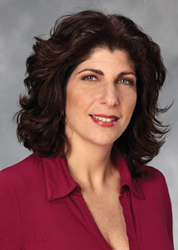
Marjorie Brook, LMT is the creator of the S.T.R.A.I.T. Method™ — Scar Tissue Release And Integrated Therapies — a scar tissue release system now taught to therapists in more than 12 countries. She has been in clinical practice for 29 years and has been brought in to train clinical staff at Singapore General Hospital and Shriners Children’s Hospital in Boston. An NCBTMB-approved continuing education provider and published author, she founded Brook Seminars in 2007 and continues to teach internationally.
She still sees patients herself, by appointment only, from her private practice in Wantagh, New York — post-surgical scars, chronic pain, and complex cases other therapies haven’t resolved. 80% of the patients who come in for a first session come back.